Putting things back together again is not easy
Last weekend I had the idea of writing a simple post celebrating some recent pro-democracy victories. In the wake of the US midterm results, I wanted to look at the occasions when voters pushed back against illiberal political parties or forces. I was going to cover Hungary, Serbia, Brazil and the US.
Then I asked an LLM whether I’d missed any significant pro-democracy victories, and it suggested I include Poland’s 2023 election which saw the formation of a broad multi-party coalition brought together to defeat the Law and Justice Party (PiS).
So I put together a cute little image of the flags of Poland, Hungary, Serbia, Brazil and America with a cheering ballot box, and then I began doing a little research…

One week later… I know a lot more about Polish politics, and the recent protests and political standoffs. And I feel much more sober about … everything?
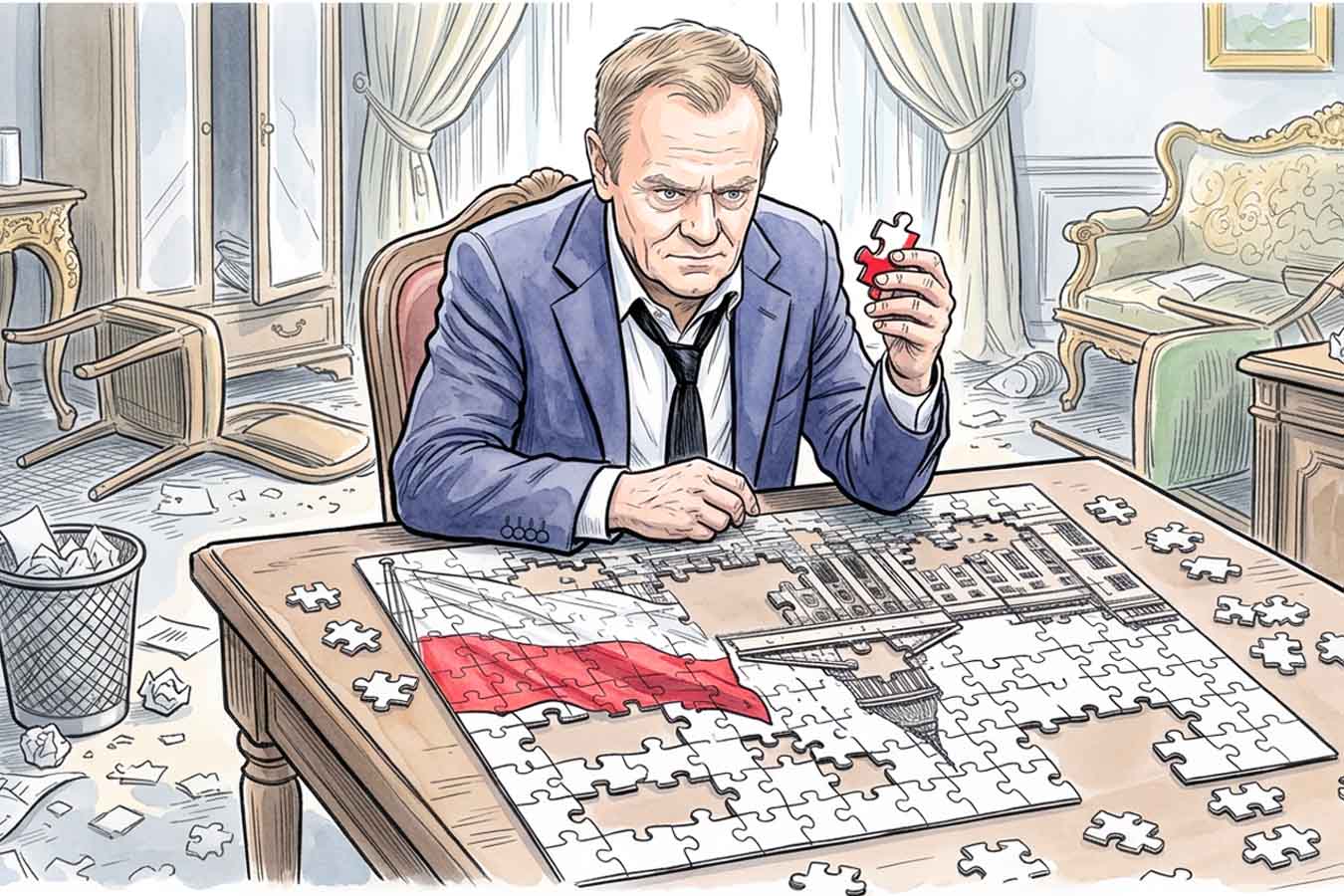
I dropped the Let’s Celebrate The Wins idea. Not because the wins aren’t important or worth celebrating. But winning an election and restoring democracy are two very different things. And when state institutions have been gutted, and procedures attacked or fundamentally altered by the previous administration, putting things back together again is anything but easy.
I think it’s important to understand what is happening in Poland because it really illustrates this point.
Another huge reason I decided to write this is because if you look at what happened at Poland’s Constitutional Tribunal three weeks ago, depending on where you get your information from, you may be under the impression that the government that is currently in power there, a broad multi-party coalition headed by Donald Tusk’s Civic Platform, is attempting to take over the courts. The situation is not straightforward. But, if you want to understand what is going on, you need to know what the Law and Justice party did while in government from 2015 - 2023.
How state power works in Poland
Poland is a parliamentary representative republic governed by the 1997 Constitution of Poland. The Constitution divides authority into legislative, executive, and judicial branches under the principle of the separation of powers, that is that each branch jealously guards its own authority and in so doing protects against any excess of power by the other two.
Parliament holds the legislative power. It consists of two houses, the Sejm and the Senate. The Sejm has the real power. It drafts and passes laws, approves the government, and has sole authority over government appointments. It can also override a presidential veto with a three-fifths majority vote — but it’s composed of so many different parties that achieving a 60% majority on something the President might veto is a near impossibility.
Executive power is shared between the government cabinet, called the Council of Ministers which is led by the Prime Minister, and the President. The President plays a diplomatic Head of State role, but also has important excutive functions like signing or vetoing bills passed by parliament, and formally appointing judges and top officials — though traditionally this was more of a rubber-stamping exercise. Day-to-day administration and policy are the responsibility of the Prime Minister and the government cabinet, who must maintain the confidence of Parliament.
There are several parts to the judicial branch. During their time in government (2015 - 2023), the PiS brought in a host of changes to all levels of the Polish judicial system. But in order to understand the current crisis the three bodies to be aware of are, the Supreme Court, the Constitutional Tribunal and the National Council of the Judiciary (KRS).
The Supreme Court is the highest central judicial organ in the state and so the highest court of appeal. It also validates national election results. The Constitutional Tribunal is a separate body which determines the constitutionality of laws in Poland. While the KRS is the constitutional body tasked with upholding the independence of the courts and judges, and it selects judges for nearly all the courts (which traditionally would then be formally appointed (i.e. rubber-stamped) by the President). The exception is the Constitutional Tribunal whose judges are appointed by the Sejm.
Who are PiS?
PiS (Prawo i Sprawiedliwość, Law and Justice) was founded in 2001 by identical twins Lech and Jarosław Kaczyński. Emerging from the post-Solidarity movement, PiS began as a centre-right, anti-corruption party focused on law and order. Over time, however, it evolved into a right-wing, Catholic-nationalist movement built around traditional values, moral renewal, and stronger executive power.
In 2005, Lech Kaczyński won the presidency, while PiS won the parliamentary elections, forming a fragile coalition government led first by Kazimierz Marcinkiewicz and then by Jarosław Kaczyński as Prime Minister.
A corruption scandal involving a junior coalition partner collapsed the government in 2007, bringing in a centrist coalition of the liberal Civic Platform with the agrarian-traditional Polish People’s Party (PSL), led by Civic Platform leader, Donald Tusk.
In 2010, President Lech Kaczyński tragically died in a plane crash in Smolensk in Russia. Jarosław Kaczyński, already the party’s leader, became its sole, undisputed driving force, steering PiS further toward national conservatism and populism.
Today the party is very socially conservative, opposing LGBTQ+ rights and abortion. Economically, they are more populist, with generous welfare supports for families, and they support heavy state intervention and economic nationalism. PiS are deeply nationalistic and can use divisive rhetoric. The party is EU-skeptic, but also deeply distrustful of Russia.
Why was the defeat of the PiS in the 2023 election seen as a pro-democracy result?
PiS came into government in 2015 with a goal of centralizing power into the hands of the executive. From 2015 - 2023, they set about bringing the judicial branch under executive control, completely undermining the separation of powers. And they carried out what was effectively a hostile takeover of state media.
PiS used the control they had gained of the courts to implement a near total ban on abortions, which the Sejm would never pass — and in a country where abortion was already only legal in a very narrow set of circumstances, more on that later.
Local government is powerful in Poland. And people generally trust that local officials will get things done. PiS did try to weaken their power too, by cutting local tax revenues and disproportionately steering central government grants away from opposition-led municipalities. The party enjoys support in rural areas and the east of the country. But almost every major city and successful metropolitan area is run by liberal or centrist officials. So, their measures targeted these areas. Ultimately though, local government has remained powerful and the high level of trust with the public has remained.
Another thing to know is that when PiS were voted into government, the President was Andrzej Duda who was PiS-endorsed. He was relected in 2020. And then Karol Nawrocki, another PiS-backed candidate was elected President in 2025. So, PiS enjoyed full control of the executive during 2015 - 2023. While the coalition that defeated them 2023 only has control of the parliament.
Bringing the Judicial Branch Under Executive Control
The Constitutional Tribunal
The crisis over appointments to the Constitutional Tribunal actually began in October 2015, just before the parliamentary elections. The outgoing parliament, led by Civic Platform, voted to appoint five judges to the Tribunal — three to replace judges whose terms ended in November, and two to replace judges whose terms ended in December, after the new parliament was due to sit. These appointments were immediately challenged as unconstitutional.
Once in government, PiS moved quickly. On December 2, 2015, the night before the Tribunal was scheduled to rule on the challenged appointments, PiS voted to appoint five of its own judges, whom President Andrzej Duda swore in overnight. The very next day, December 3, the Tribunal ruled that three of the outgoing parliament’s appointments were legally valid, while two were invalid. President Duda, however, refused to swear in the three validly elected judges.
For a year, the Tribunal’s outgoing president refused to let PiS’s three contested appointees hear cases. That changed in December 2016, when President Duda appointed a PiS-aligned judge, Julia Przyłębska, as President of the Tribunal. She immediately admitted the three PiS appointees to adjudicate cases. The opposition and some legal scholars dubbed them “double judges” (sędziowie-dublerzy) because they were placed in seats that had already been legally filled. Because their appointments were unlawful, the validity of any ruling they participated in was called into question, triggering a long-running constitutional crisis.
While the outgoing Civic Platform coalition had overreached on two seats, PiS escalated the dispute into a systemic dismantling of the court. They passed a series of laws changing how the Tribunal operated, including required number of judges and votes. When the Tribunal struck down the first set of changes as unconstitutional in March 2016, the PiS government simply ignored the ruling and refused to publish it in the official journal, claiming the court had used the wrong procedures.
In 2021, the European Court of Human Rights ruled in Xero Flor v. Poland that a Polish company had been denied its right to a fair trial because the Constitutional Tribunal did not satisfy the definition of a “tribunal established by law”strong>. The Xero Flor case had been heard by a panel including one of the “double judges” — who was not validly appointed in accordance with domestic Polish law.
There were many different cases and legal challenges to various aspect of the PiS judicial overhaul. This ruling in particular shows how destructive those changes were; it was no longer a given that a European court would recognise the validity of a ruling by a Polish court.
The National Council of the Judiciary (KRS)
The KRS selects the people to become judges throughout nearly all of the courts of the land. It was created in 1989. The 1997 Constitution designates the KRS as the guardian of the independence of courts and judges. The 25-member Council includes 15 judicial members alongside 10 political and ex-officio representatives. The constitutional wording regarding how the fifteen members are chosen is vague. But from its creation in 1989 until December 2017, its 15 members were elected directly by judges themselves.
PiS used the ambiguity of this wording to pass legislation to have the Sejm choose the Council’s members by simple majority, and they immediately ended the terms of the 15 sitting members. This meant the party in government (the executive), who has normally has control of the Sejm, had direct influence over KRS, the guardian of the independence of the judiciary. This called into question the legality of any subsequent selection of judges by the KRS, sometimes referred to as “neo-judges”, which amounts to thousands of judges — and so too their judgements.
Subsequent legislation passed by PiS blocked national courts from conducting judicial reviews of KRS appointment recommendations, causing the European Court of Justice (ECJ) to find that these changes violated EU law.
The Supreme Court
In July 2017, PiS first attempted to pass legislation dismissing all sitting Supreme Court judges. Mass street protests erupted across Poland, and President Duda unexpectedly vetoed the bill. However, in December of that year, PiS passed a revised law that achieved a similar result. Instead of firing the judges outright, it lowered their mandatory retirement age from 70 to 65, effectively forcing out roughly 40% of sitting Supreme Court judges, including its First President. The ECJ eventually blocked this purge and ordered the judges reinstated.
Alongside the retirement changes, PiS created a new Disciplinary Chamber within the Supreme Court, staffed by judges nominated by the newly politicized KRS. The chamber had the power to strip judges of their immunity, cut their salaries, and punish them for the content of their rulings or for applying EU law. It drew immediate condemnation from the Polish opposition, the EU, the OSCE, the Council of Europe, and the UN.
In April 2020, the ECJ issued an interim injunction ordering Poland to suspend the Disciplinary Chamber’s operations. When the PiS government defied the order, the ECJ imposed a historic fine of €1 million per day against Poland in October 2021 until the chamber was dismantled.
Other Measures
The offices of the Justice Minister and the Prosecutor-General were merged, meaning the Minister for Justice, a member of government, was given direct control over all public prosecutors, criminal investigations, and the power to intervene in specific legal cases. PiS had previously merged these roles during its 2005–2007 government, a move the subsequent government had reversed to protect prosecutorial independence.
In July 2017, PiS introduced a law concerning judges of the lower ordinary courts, which reduced the age of retirement for female judges to 60 and for male judges to 65, down from the 67. The law also gave the Minister for Justice the power to extend the period of active service of these judges beyond the new retirement ages. Meaning the Minister for Justice could keep in service judges they liked past these ages, and force out those they didn’t. The European Court of Justice (ECJ) ultimately blocked these measures and forced the reinstatement of judges.
Controlling the Narative - the State Media Takeover
KRRiT (the National Broadcasting Council, Krajowa Rada Radiofonii i Telewizji) was formally set up in 1993 to dismantle communist-era state-controlled media and enforce independence, impartiality, and plurality across the dual public and private broadcasting landscape.
The Polish Constitution, adopted in 1997, explicitly mandates the existence of KRRiT as a constitutional organ. The Constitution assigns this specific council the task of safeguarding freedom of speech, the right to information, and the public interest in radio and television broadcasting.
In late December 2015, PiS rushed through a “Small Media Law”, signed by President Duda in early January 2016, that stripped KRRiT of its power to appoint the heads of public television (TVP) and Polish Radio. Initially, the law handed the Treasury Minister unilateral power to hire and fire public media boards. Top editors and managers immediately began resigning or being dismissed.
In June 2016, PiS transfered these powers to appoint and dismiss public media heads to a newly created National Media Council (Rada Mediów Narodowych), in which the government held the majority vote. This gave PiS direct, long-term control over public television, public radio, and the Polish Press Agency. By July 2016, media watchdogs and journalists unions documented that over 140 to 160 prominent journalists had already been fired or forced out. These vacant positions were then filled with people loyal to the PiS.
In December 2016, the Constitutional Tribunal, not yet fully captured by PiS, ruled that stripping KRRiT of its role in appointing public media management was unconstitutional. However, because PiS had already created the National Media Council under a separate law, the government used that technicality to ignore the ruling and leave the new council intact.
By the time of the 2020 Presidential elections, international observers from the OSCE concluded that the state broadcasters had abandoned their statutory requirement to provide balanced and objective reporting, and acted as “a campaign vehicle for the incumbent”, the PiS backed Andrzej Duda. Duda won the 2020 presidential elections.
Breaching Core EU Values
PiS judicial overhaul undermined the independence of the judiciary to such an extent that it undermined the rule of law, made both judges and their judgements legally dubious, violating people’s and corporations’ right to a fair trial.
In December 2017, the European Commission became so alarmed by this systemic threat to the rule of law that it triggered Article 7 (TEU) proceedings against Poland, that is for breaching core EU values, in this case, democracy and the rule of law. PiS’s reforms undermined the separation of powers.
The EU later used separate financial rules to freeze €137 billion in recovery and development funds until Poland agreed to restore judicial independence.
The EU eventually closed the Article 7 case and unlocked those funds in 2024 after Donald Tusk’s government committed to an action plan to repair the courts.
Alarmed the EU Can Freeze Funds?
To critics of the EU, freezing funds may look like overreach, but it follows a whole process. And in this instance, it highlights one of the EU’s core strengths; its commitment to the rule of law, civil liberties, and equality. Countries like Ireland owe much of their strong equality legislation to standards required by the EU, and those same binding standards are why the EU insists on independent courts in every member state.
I say this as someone who believes there are valid concerns about a democratic deficit in how the EU functions that warrant reform.
But the EU insisting on the rule of law, on independent courts, is an EU enforcing its commitment to democracy, not undermining it. Ultimately, it is protecting the separation of powers — and who wants to live in a country where justice is decided by whoever happens to be in power? Or with a media that praises everything the government or President does, and vilifies all their critics?
The Protests Movements
There were protests against many of the extreme changes PiS were implementing. Notably, as mentioned earlier, there were mass protests against the attempted total purge of the Supreme Court in the summer of 2017.
But the protest movement that posed the fiercest challenge to PiS grew out of grassroots networks formed before 2015, by women campaigning to reform Poland’s abortion laws.
Under the Communist regime, abortion had been fully legal since 1956. Poland is a predominantly Catholic country. So, with the fall of Communism and the religious freedom that was re-established, restricting access to abortion was widely supported. Remember that at that time, the then Pope was Polish, John Paul II, and he had played a role in the defeat of Communism.
While restricting access was supported, an outright ban was not. So in 1993 a “compromise” law was adopted, that allowed for access to abortion under three narrow conditions: a threat to the mother’s life or health, a pregnancy resulting from rape or incest, or severe and irreversible foetal abnormality.
In 2016, an ultraconservative citizens initiative submitted a bill seeking a total ban on abortion, which PiS members initially voted to advance through parliament. This led to a wave of “Black Protests” sweeping across the nation. These protests, filled with women dressed in black and carrying black umbrellas were successful in their immediate goal of stopping any legislation that would undo the 1993 “compromise”, and they also sparked a much wider national conversation about women’s rights.
In 2019, knowing they couldn’t get a full ban through parliament, PiS instead filed a direct constitutional challenge to the 1993 law through the Constitutional Tribunal — which by then was packed with PiS-appointed judges.
In October 2020, the Tribunal ruled that abortions due to foetal abnormalities were unconstitutional. Because those cases made up roughly 98% of all legal terminations in the country, the ruling effectively enacted a near-total ban on abortion, which came into force at the start of 2021.
The protests that followed, “Women’s Strikes”, featured the largest public demonstrations in Poland since the fall of Communism. It moved far beyond just women in black, everyone got involved — hundreds of thousands of youth, workers, and even farmers blocked roads. They fundamentally shifted public opinion and played a huge role in the ultimate downfall of the PiS government in 2023.
Ireland is also a predominantly Catholic country and for decades we had a constitutional ban on abortion. The “compromise” allowed here, was that you could travel abroad to terminate a pregnancy. There was a long-standing campaign to get abortion rights for women in Ireland and in 2018 a referendum on whether to overturn the ban passed 66.4% to 33.6%. What I learned, from tragedies that happened here because of that ban, and from accounts by women who had travelled to the UK to get an abortion, is that bans don’t reduce the number of abortions, they just make things more difficult and less safe for women. So — paradoxically — if you really care about life, if you really are pro-life, you have to allow for access to safe and legal abortions.
The Defeat of the PiS Government
The run-up to the October 2023 election was widely framed by the opposition as a last chance to save democratic norms in Poland, following eight years of systematic institutional capture by the PiS government.
Rather than just criticising the ruling party, in September 2023 the Civic Coalition unveiled a highly ambitious platform called the “100 Concrete Policies for the First 100 Days”. Designed to counter claims that the opposition lacked a cohesive vision, this manifesto promised immediate action across every facet of Polish life. At its core, Tusk campaigned on repairing Poland’s fractured relationship with Brussels to unblock billions in frozen EU funds, depoliticizing state media, lowering income taxes, and restoring women’s reproductive autonomy by legalising abortion up to 12 weeks.
The strategy successfully mobilized a weary electorate, turning a routine political contest into a nationwide referendum on the rule of law. The momentum generated by the massive grassroots “Women’s Strikes” and an aggressive, unified push from the centrist and left-wing opposition blocks gave voters a clear alternative to the increasingly rigid state.
On October 15, 2023, PiS came first with 35.4% of the vote, but lost its parliamentary majority. Voter turnout hit roughly 74% — 12.6 percentage points up from 2019 and the highest since the fall of Communism in 1989.
To form a government, Tusk assembled a broad, multi-party coalition spanning the political spectrum; including his own Civic Coalition, the centrist Poland 2050, the traditional agrarian Polish People’s Party, and The Left. Together, these pro-democratic forces won a clear majority of 248 out of 460 seats in the Sejm.
Tusk’s government was sworn in on 13 December 2023, and supporters were elated. But the euphoria of victory was short-lived. The new government was composed of coalition partners who often disagree on social policy, and they still had to deal with a hostile PiS-aligned President and courts packed with PiS loyalists.
Rebuilding is Harder Than Demolishing
When a government spends eight years rewriting institutional procedures, shifting powers, and packing courts and regulators with loyalists, a single election victory cannot undo the damage overnight. PiS conceded defeat, but Tusk’s coalition found itself governing inside a system designed to paralyse it.
While the coalition held a parliamentary majority, it lacked the three-fifths supermajority required to override a presidential veto. With PiS-backed Andrzej Duda in the presidency until 2025, then followed by another PiS-backed president, Karol Nawrocki, Tusk’s legislative agenda ran straight into a brick wall. Both presidents repeatedly vetoed bills passed by parliament, and also refused to swear in or formally appoint newly nominated judges and ambassadors — something which previously had just been a rubber-stamping exercise. The resistance of PiS-backed Presidents against any moves by the government created deep institutional gridlock.
Restoring Independent & Impartial State Media
President Duda could veto any legislation aimed at abolishing the PiS-controlled National Media Council, while the PiS-packed Constitutional Tribunal stood ready to block any unilateral overhaul of public broadcasters. In order to bypass these obstacles Tusk’s government had to find some mechanism in existing legislation that would allow it force through changes. Such a mechanism was found in commercial law.
- Under Polish commercial law, when a company enters liquidation, the powers of its existing management board are suspended and an appointed liquidator takes over operational control.
- State television (TVP) and Polish Radio are legally structured as state-owned commercial companies reliant on government subsidies. In December 2023, President Duda vetoed a budget bill containing roughly €700 million in public media funding.
- The Minister for Culture, Bartłomiej Sienkiewicz, announced that because the President had cut off their funding, the state media companies were effectively insolvent and so had to be placed into formal corporate liquidation.
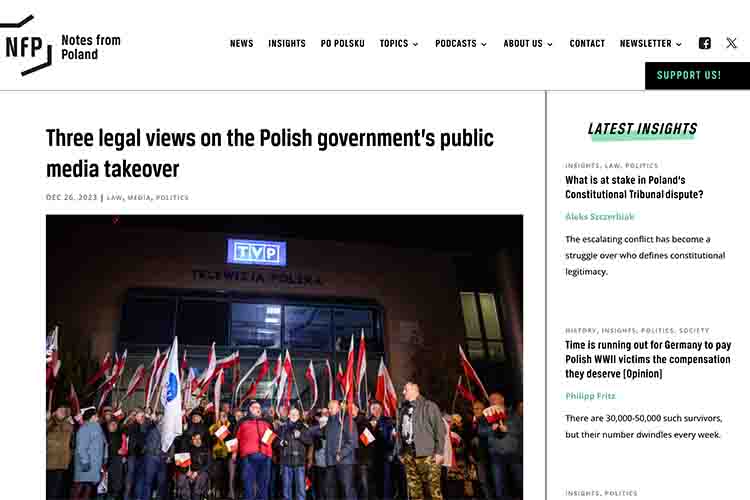
- By going down the corporate-law route, intended as a temporary restructuring rather than a permanent shutdown, Tusk’s government was able to fire the PiS propagandists, pull the biased TVP Info channel off the air, and restructure the stations — without ever needing President Duda to sign a law or to get permission from the PiS-packed National Media Council.
It was an extremely bold move, and deeply polarizing. Because of the institutional paralysis they were up against, and because re-establishing the freedom and independence of media is so important, I find it hard to criticise what they did. But while supporters celebrated the end of state propaganda, even independent legal watchdogs, such as the Helsinki Foundation for Human Rights, criticised the method used.
Constitutional experts warned that using commercial liquidation loopholes to bypass statutory media laws set a troubling precedent, risking normalising the very kind of executive shortcuts PiS had used. Press freedom groups also noted that while public broadcasts became far less toxic, establishing genuine, long-term editorial independence remained unfinished business as long as media governance depended on political workarounds.
But was it a step in the right direction, while all other routes to restoring free and impartial state media were blocked? I think so. I guess time will tell.
Reproductive Freedoms
As part of his “100 Concrete Policies in 100 Days” campaign pledge, Donald Tusk promised to legalise abortion up to the 12th week of pregnancy — which would have granted Polish women broader reproductive rights than they had even before PiS took power. However, Tusk later acknowledged that his coalition lacked the parliamentary votes to pass such a reform due to resistance from its more conservative partners, particularly the traditional agrarian Polish People’s Party (PSL), which favoured simply restoring the 1993 “compromise” law.
That internal compromise drew sharp criticism from women’s rights activists, who accused the government of breaking a core election promise. Eventually, in October 2026, the Sejm passed two narrower bills; one to reinstate the 1993 exception for severe foetal abnormalities, and another to decriminalise helping a woman access an abortion.
Even after clearing the Senate, just over a week ago, both bills face an almost certain veto from President Karol Nawrocki, who staunchly opposes loosening abortion laws. And even if the President were not to use his veto, or if parliament somehow mustered a three-fifths majority to override it, any reform would still run into a Constitutional Tribunal packed with PiS loyalists, which already ruled in 2020 that the foetal abnormality exception was unconstitutional.
Restoring the normal, legitimate functioning of the Constitutional Tribunal remains the key to everything.
Restoring Judicial Independence
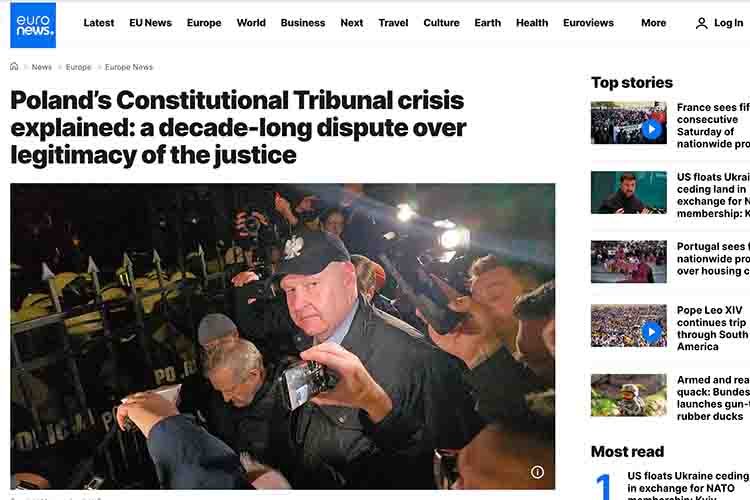
Last month, Tusk’s battle to reform the judiciary erupted into dramatic protests, clashes, and a full-blown constitutional standoff in Warsaw.
Earlier this year, the Sejm elected eight new judges to fill vacancies on the Constitutional Tribunal. President Nawrocki swore in three of them, but refused to administer the oath to the other five — despite the Council of Europe’s Venice Commission concluding that all eight were validly elected members. When the Tribunal’s PiS-appointed President, Bogdan Święczkowski, refused to recognize the five judges and launched disciplinary proceedings against the other three, the standoff reached a breaking point.
On October 30, 2026, Judge Anna Korwin-Piotrowska, one of the unsworn-in judges, acting in her capacity as the Tribunal’s longest-serving career judge, announced the one-month suspension of Święczkowski and his deputy, assuming interim leadership of the court while the Justice Minister moved to lift their immunity.
PiS leaders denounced the move as a “coup”. Hundreds of angry protestors and right-wing politicians swarmed the Constitutional Tribunal building in Warsaw. Protesters clashed with security, with some scaling the perimeter fences, throwing objects at officers, and chanting slogans denouncing Tusk. The police made multiple arrests
The PiS fully played up the drama. When the protests erupted PiS-aligned President Karol Nawrocki was on his way to Senegal for an official state visit. He ordered his plane make a mid-air U-turn.
The government created quite a bit of drama themselves, drafting in lines of heavy riot police to encircle and protect the court building, creating a tense, highly visual blockade in the capital.
When President Nawrocki reached the protests in Warsaw, he marched straight past the riot police and into the Tribunal building. He physically helped the suspended President of the Constitutional Tribunal, Święczkowski, get inside to defy the order. Nawrocki declared that Poland’s constitutional order had been violated by a “forcible takeover”.
Was deploying riot police and using a contested internal suspension the ideal way to fix a broken court? Almost certainly not. But it is clear that measures have to be taken to properly restore judicial independence. That said, I really hate to see riot police on the streets.
Donald Tusk went on prime-time television, completely unbowed. He defended the police deployment and the judicial shakeup, saying, “In certain matters, there can be no compromise.” He argued that after years of PiS lawlessness, putting the courts back together would be a difficult and “sometimes painful” process, but that decisive action was the only way forward.
Independent constitutional experts remain divided over whether such aggressive shortcuts are a necessary last resort against an obstructed court, or a dangerous escalation that deepens Poland’s legal chaos.
What is clear, however, is how Poland arrived at this crisis. You cannot spend eight years dismantling checks and balances, packing courts with loyalists, and ignoring binding rulings — and then expect the repair process to be tidy. Restoring an independent Constitutional Tribunal is essential for Polish democracy. It would be great if PiS could acknowledge the damage they did to the Polish courts and their reputation internationally, and help restore its functioning, not make more of a spectacle of things. Am I being too harsh there? I don’t think so.
Progress Made?
Despite these gruelling institutional clashes, Tusk’s government has delivered several tangible breakthroughs alongside these ongoing battles:
- Good Relations with the EU: About €137bn in funds frozen over rule-of-law concerns was unlocked in early 2024, and the EU formally ended its Article 7 proceedings against Poland.
- Public Sector Pay Rises: In 2024, the coalition fulfilled a major pledge by granting teachers a 30% pay rise — their largest increase in decades — alongside a 20% raise for wider public sector workers.
- Economic Growth: After near-stagnation in 2023 (when growth dipped to around 0.2%), Poland’s economy rebounded strongly — officially crossing the $1 trillion nominal GDP milestone in 2025 and maintaining real growth of around 3.4% to 3.6% through 2026, making it one of the fastest-growing economies in Europe. Meanwhile, inflation eased from its 2023 double-digit highs down to roughly 3.5% by late 2026, aided by central bank policy and falling global energy costs.
Still, Poland’s struggle offers a sobering lesson for modern democracies. It is remarkably easy for illiberal leaders to shatter democratic norms, and painstakingly slow, messy, and imperfect work to piece those institutions back together again.
Something Democracies Around the World Can Learn From?
I originally started this post wanting to celebrate, among other things, the massive vote against the Trump administration in the US midterms. That is how I see those results. A massive rejection of what is happening both domestically and internationally. And it’s such a relief to see the American people standing up and showing up for democracy.
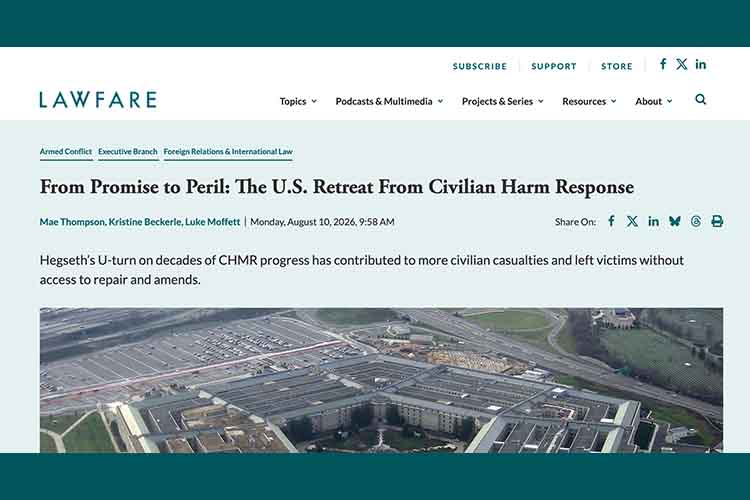
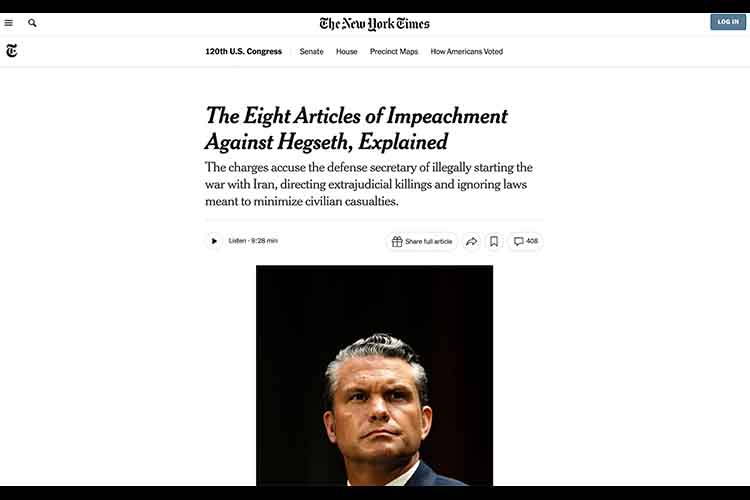
So, that made it all the more disappointing that a number of Congress people failed to show up in time to vote on a motion that sent the impeachment of Defense Secretary Pete Hegseth to committee, meaning it’s unlikely to move forward. Are they aware of how he has purged top military officials? Or how the rules of engagement are being ignored? And that the world’s largest and best-equipped army is now told to ignore the rules and just do as you’re told? Do they get how dangerous it is to have a military ignoring rules and only following the orders of one particular administration?
I don’t care what your position on being woke is. Or whether you are Republican or Democrat. Please wake up. Listen to voters and realise that your democracy is under serious threat. Take the threat seriously. Because putting things back together again, when they’ve been broken just so as to fit one administration, is anything but easy.