Lemon Meringue Pie - lovely combination of taste & texture
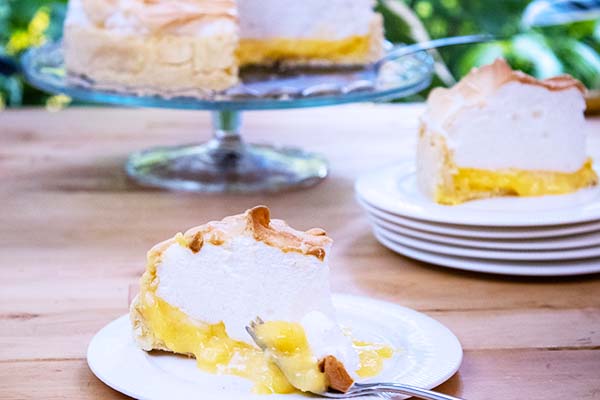
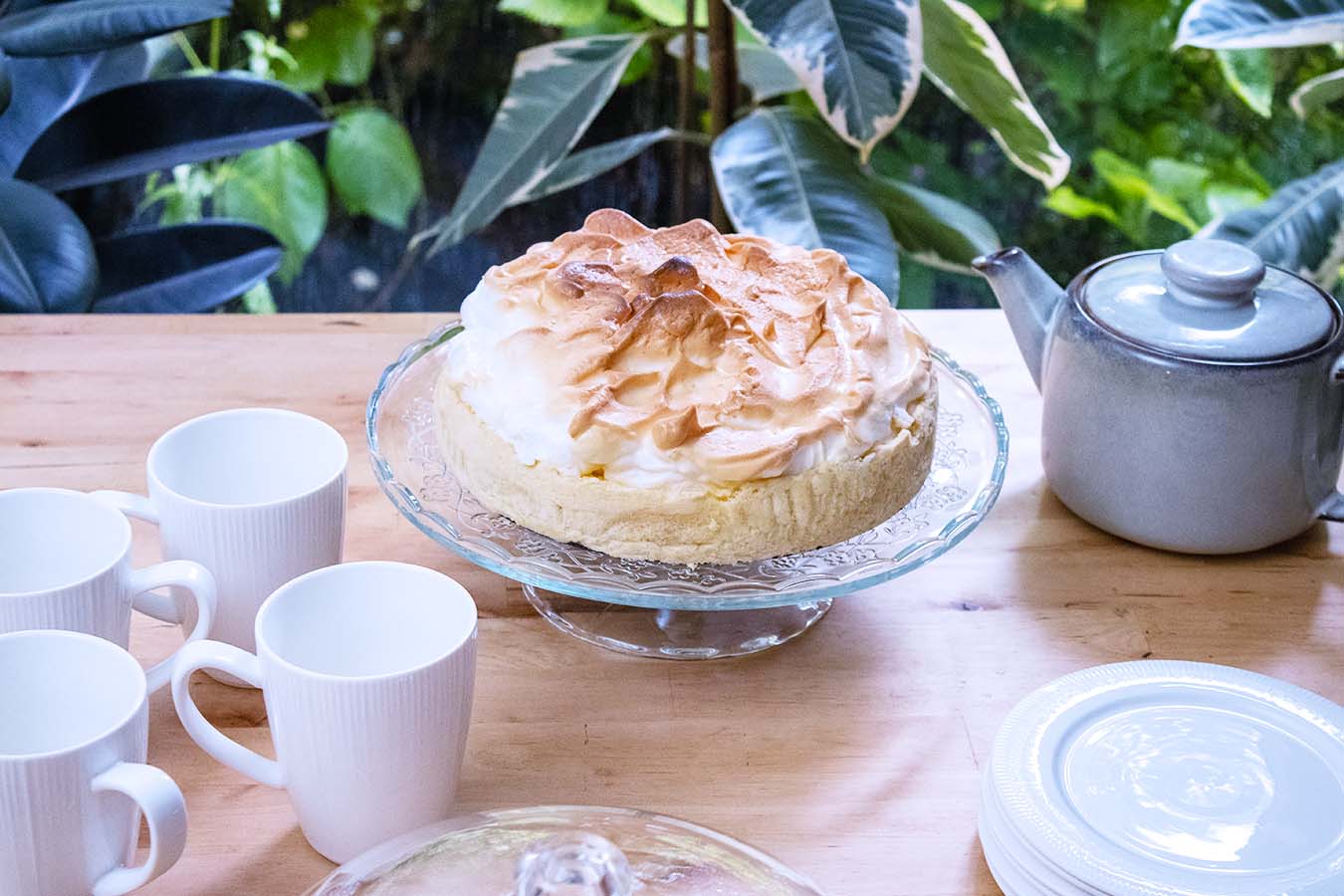
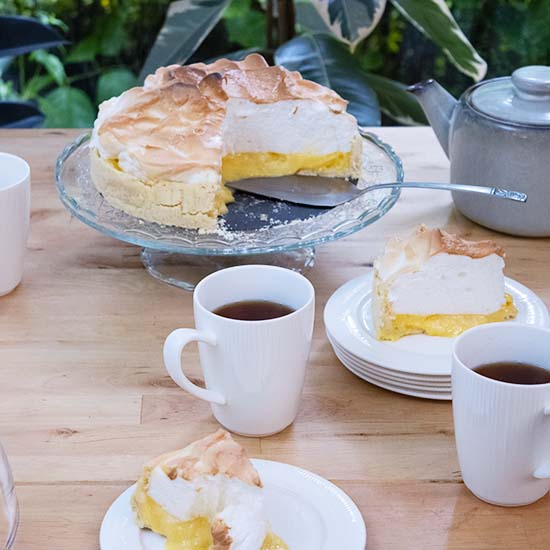
I first posted this recipe in 2017. At the time, I wasn’t happy with the pastry and I promised an update. So here is gluten-free lemon meringue pie that is also dairy-free as the sweet pastry is made with coconut oil and almond milk rather than butter and whole milk. I love dairy. I just wanted to see what a coconut oil pastry case would taste like. It tastes kinda like those Nice biscuits and works surprisingly well the tangy lemon custard and soft fluffy meringue.
If you have never tasted Nice biscuits it’s important to know that they taste of coconut. So if you don’t like coconut at all, you probably won’t like the coconut oil pastry. But, if dairy isn’t a problem for you, you can easily swap butter for coconut oil and whole milk for the almond milk. It works with a one to one substitution.
I don’t always like coconut but I like it in this so much that I’m going to make the coconut oil version of pastry for all my future lemon meringues.
The reason why I wanted to come up with a non-dairy version is because I rarely make lemon meringue pies these days. Even though it is one of my favourite desserts. Why? Because there is a similarly tangy dessert that is super simple and really difficult to mess up; Key lime pie. And it’s so easy to mess up a lemon meringue pie.
The pastry is actually the easy bit. It’s so easy to mess up the rest of it. You have to be certain no yolk mixes in with the egg whites. Otherwise the meringue won’t form properly. Then when you’re thickening the lemon with the cornflour you really have to pay attention to what you’ doing or it can turn into rubbery lumps. You have to remember to cook the lemon custard after whisking in the hot thickened lemon juice into the yolks whipped up with sugar. Otherwise, the lemon custard will separate later. There are a lot of ways this recipe can go wrong. And I have experienced every one of them.
I love lemon meringue pies. But they demand that you watch what you’re doing the whole time. Which is not always my thing.
Lemon Meringue Pie
Yield: Serves 6
Suitable for: Gluten-free diet
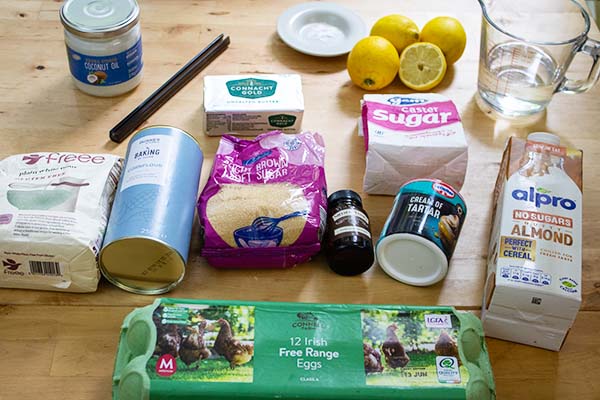
Ingredients:
For dairy-free pastry
- 200g gluten-free plain flour
- 35g cornflour
- 25g golden caster sugar, or fine brown sugar
- 110g unsalted butter or coconut oil, solid state
- ¼ tsp finely ground salt
- 1 medium-sized egg yolk
- 2-3 tbsp whole milk or almond milk
For lemon filling
- 3½ lemons
- 200ml water
- 5 medium-sized egg yolks
- 75g cornflour
- 200g caster sugar
For meringue topping
- 6 egg whites
- 4 tbsp caster sugar
- ½ tsp cream of tartar
- ¼ tsp vanilla extract or vanilla bean paste, optional
Instructions:
Separate the eggs
Carefully separate the eggs into freshly cleaned bowls. Cover and leave aside for later use.Make the pastry
Sift the gluten-free plain flour, cornflour, brown sugar and salt together into a bowl. Place the contents of the bowl Next, add in the cold diced unsalted butter or the solid scoops of coconut oil. Mix until it is all well mixed together and the flour now looks more crumb-like. Add in the egg yolk and mix together well. You may have to scrape down the sides and bottom of the food mixer to make sure everything is very well combined. Next, with the food mixer turning, pour in the whole milk or almond milk one tablespoon at a time. After adding a tablespoon of milk, let the blades spin around for a count of 20. You will see the mix start to come together. If after the second the tablespoon of milk and counting to 20, a dough ball has formed you can stop mixing and you do not need to add any more liquid. If you are adding whole milk you will probably only need 2 tablespoons of milk, but you will probably need 3 tablespoons of the almond milk. It is possible that a dough ball won’t form and instead you have a paste that you can scrape out of the food mixer with a spatula and form the dough ball with your hands. With this dough it is likely to form a dough ball, but if you add more liquid than you meant to or if you add in a whole egg rather than an egg yolk, this can happen. It is fine, you just won’t be able to roll it out, but you can shape it with your hands. Take the dough out from the mixer, shape into a ball, if it is not already formed, and place in bowl. Cover with clingfilm and refrigerate for 30 minutes.- Heat the oven to 180° C. Line the sides of a 9″ cake tin with baking paper that is greased on both sides. This dough rolls out well but it can tear easily. Don’t worry, you can smoosh any tears together with your fingers. With the dough now lining the cake tin, place a layer of baking paper on top of the dough and fill it with baking beans. Bake in the oven for 12 minutes. Take out and leave to cool for at least 15 minutes or when the baking beans and the tin is cool enough not to burn you. Then remove the baking beans and the baking paper under them. You can also, gently, remove the baking paper from the sides of the tin.
Make the lemon custard
Zest two the lemons. Put the lemon zest in a small saucepan with the water. Put on a gentle heat for 10 minutes to infuse the water with the taste of lemon.- Place the remaining 5 egg yolks in a deep bowl and whisk together with 200g of caster sugar. Beat until it fluffs up and takes on a pale buttery colour.
- Next, juice the lemons. Pour the juice through a sieve into a bowl containing the 75g of cornflour. Mix together well so that there are no lumps. Then pour the lemon-zest infused water from the saucepan through a sieve into the bowl. Stir together well. Pour the contents of the bowl back into the saucepan. Turn up the heat to gentle-moderate and stir continuously with a whisk. Heat until the mixture has thickened. This takes a few minutes. And when it thickens it does so suprisingly suddenly, so keep stirring to prevent lumps forming. Once it has thickened remove from the heat. It will be rather paste-like. That is fine. It just shouldn’t have any lumps.
- The lemon custard is made by mixing this thickened lemon-cornflour mix with the egg yolks whipped up with the sugar, which you then must heat again to cook the yolks. This way the yolks become stabilised. If you skip this step the lemon custard can liquefy and separate later, even after baking.
With the lemon-cornflour mix, remove from the heat. Beat in a small spoon of this hot mix into the yolk-sugar mix. To avoid curdling an egg mix the rule is always hot into cold in small amounts so that you gently heat the cold mix, never cold into hot. Repeat this until you have been in about ⅓ of the contents from the saucepan beaten into the eggs. You do this to temper the eggs so that they won’t scramble when you add in the hot mix. You can then then mix in the rest of the lemon mix. You will probably need to use a spatula to get all the cornflour-thickened lemon juice from the pan. Beat in well. Then you transfer the lemon custard from the bowl back into the saucepan. Next, heat the lemon custard on the stovetop for 3 - 5 minutes. Keep stirring all the time to avoid lumps forming. This step is very important to ensure that egg yolks are stabilised and don’t liquefy later. With the lemon custard cooked, pour it into the baked pastry case. Make the meringue
Turn the oven on to 160° C. Beat the 6 egg whites until they form soft peaks and then beat in the sugar and beat until they meringue is stiff and glossy. Beat in the cream of tartar and the vanilla extract, if using. Pipe or spread the meringue on top of the lemon custard.Bake the pie
Bake the pie for 25 minutes. Take out and leave cool completely.
Enjoy!